Jul 17, 2026
Introduction
China has become one of the world's leading manufacturing hubs for automotive refinish paint. Today, thousands of distributors, importers, wholesalers, and private-label brands source automotive refinishing products from Chinese manufacturers due to competitive pricing, advanced production technology, and continuous product innovation.
However, not all manufacturers offer the same level of quality, technical expertise, or long-term business support. Choosing the wrong supplier can result in inconsistent product quality, delayed shipments, poor color accuracy, and dissatisfied customers.
Whether you are planning to launch your own automotive paint brand, expand your product portfolio, or become a regional distributor, selecting the right manufacturing partner is one of the most important business decisions you will make.
In this comprehensive guide, we will explain the key factors every buyer should evaluate before selecting an automotive refinish paint manufacturer in China. You'll also learn what separates a reliable long-term partner from an ordinary supplier.
Why Are More Global Buyers Choosing Automotive Paint Manufacturers in China?
Over the past two decades, China has evolved from a low-cost manufacturing base into one of the world's most advanced automotive coatings production centers.
Many international automotive refinish paint brands now cooperate with Chinese factories for OEM manufacturing, product development, and global distribution. Continuous investment in production equipment, research laboratories, and quality management systems has enabled Chinese manufacturers to supply products that meet international market requirements.
Today, buyers from Latin America, Southeast Asia, the Middle East, Africa, and Eastern Europe increasingly choose Chinese suppliers because they offer:
Competitive manufacturing costs
Stable production capacity
Flexible OEM and private label services
Complete automotive refinish product systems
Faster product development
Professional export experience
Continuous technical support
For distributors, partnering with the right Chinese manufacturer can improve profitability while maintaining consistent product quality for customers.
What Makes a Professional Automotive Refinish Paint Manufacturer?
Choosing a supplier should never be based solely on price.
Professional manufacturers invest heavily in research, quality control, production management, and customer support to ensure long-term business success.
Below are the most important factors every buyer should consider.
1. Manufacturing Experience
Experience is one of the strongest indicators of a manufacturer's reliability.
Automotive refinish coatings require years of formulation expertise, production management, and market feedback. Manufacturers with decades of experience are generally better equipped to produce consistent products, solve technical challenges, and adapt to changing market demands.
When evaluating a supplier, ask questions such as:
How many years have they specialized in automotive refinish paint?
Do they manufacture products themselves?
Have they supplied international markets?
Can they provide long-term technical support?
A manufacturer with extensive industry experience is more likely to become a stable long-term partner rather than simply a product supplier.
2. Complete Product Portfolio
Professional distributors prefer manufacturers capable of supplying an entire automotive refinishing system rather than individual products.
A complete product range typically includes:
Automotive Color Toners
HS & MS Clearcoats
Hardeners
Thinners
Primers
Polyester Putty
Plastic Primer
Degreasers
Spot Repair Products
Color Matching Software
Spectrophotometer Integration
Working with a single supplier helps ensure compatibility between products while simplifying purchasing, logistics, and technical support.
3. Product Quality and Consistency
Consistent quality is essential for building customer trust.
Professional manufacturers implement strict quality control throughout every stage of production, including:
Raw material inspection
Formula verification
Batch consistency testing
Viscosity control
Gloss measurement
Adhesion testing
Drying performance evaluation
Packaging inspection
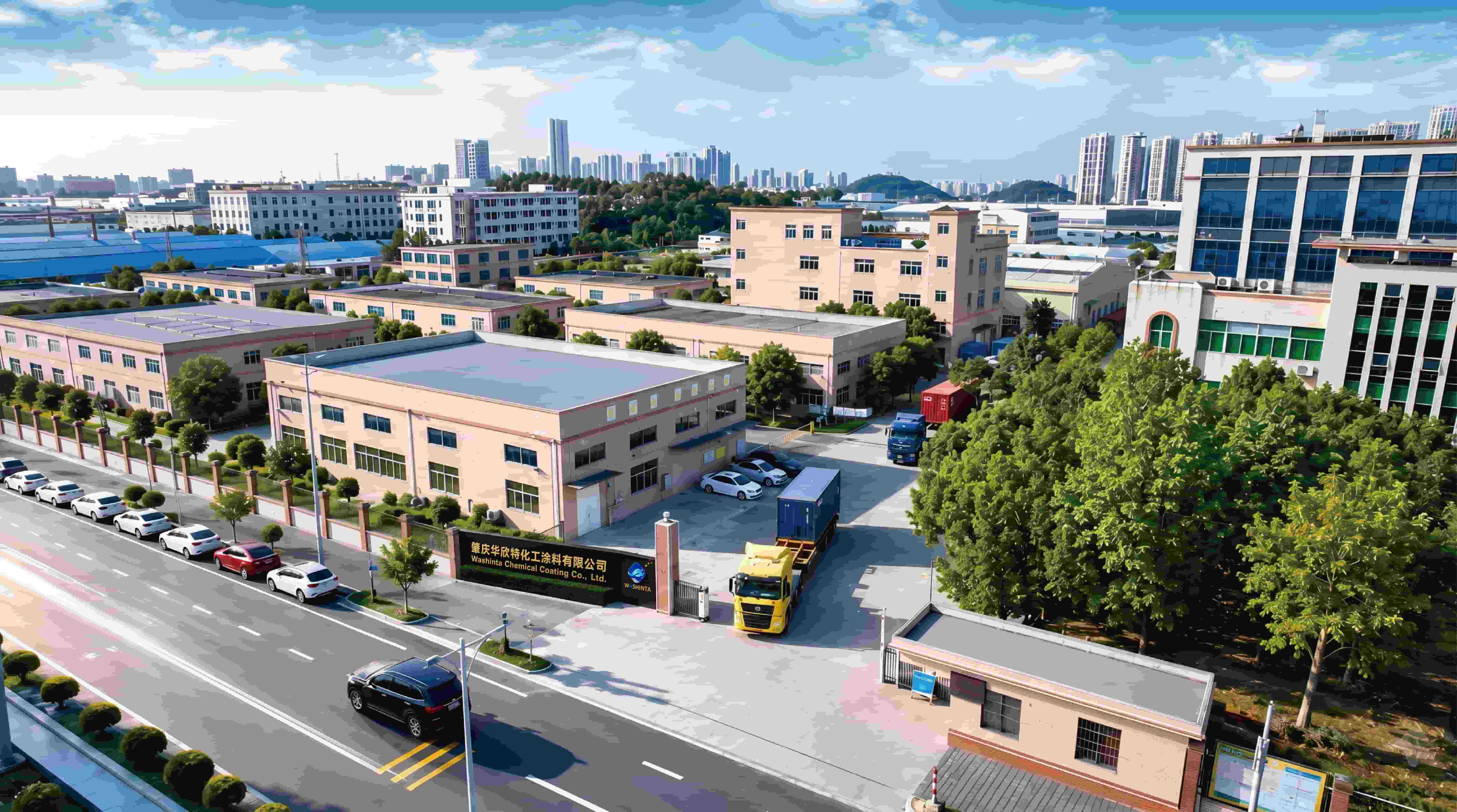
4. Production Capacity and Manufacturing Facilities
Production capacity is often overlooked when selecting an automotive refinish paint manufacturer, yet it directly affects delivery reliability, product consistency, and your ability to grow your business.
A professional manufacturer should have modern production facilities capable of meeting both small and large-volume orders without compromising quality.
When evaluating a factory, consider asking:
What is the annual production capacity?
How many production lines are in operation?
Can the factory handle seasonal demand increases?
What is the average lead time for OEM orders?
Are production and packaging completed in-house?
If possible, request a factory tour or a live video inspection. Seeing the production lines, raw material storage, laboratories, and packaging facilities provides valuable insight into the manufacturer's capabilities.
A well-organized factory demonstrates professionalism, efficient management, and a long-term commitment to quality.
5. Research and Development Capabilities
The automotive industry is constantly evolving. New vehicle models, paint technologies, environmental regulations, and customer expectations require manufacturers to continuously improve their products.
A reliable automotive refinish paint manufacturer should have a dedicated research and development (R&D) team capable of:
Developing new products
Improving existing formulas
Testing raw materials
Meeting international VOC requirements
Supporting OEM customization
Responding quickly to market changes
Innovation is especially important as electric vehicles introduce more complex factory colors and special-effect finishes.
Manufacturers that invest in R&D are better prepared to support distributors in highly competitive markets.
6. Color Matching Technology Is Becoming More Important Than Ever
One of the biggest challenges facing modern body shops is accurate color matching.
Today's vehicles feature increasingly sophisticated colors, including:
Pearl finishes
Metallic colors
Xirallic effects
Three-stage paints
Matte finishes
High-chroma colors
These finishes require more than traditional color cards or manual adjustments.
Leading manufacturers now provide intelligent color matching solutions that combine:
Digital color formula databases
Spectrophotometer integration
AI-assisted formula correction
Continuous software updates
Cloud-based color management
This technology helps body shops reduce repainting, improve first-time match accuracy, and minimize paint waste.
For distributors, offering advanced color matching solutions adds significant value beyond simply selling paint products.
7. Chinese EV Colors Are Creating New Business Opportunities
The rapid expansion of Chinese electric vehicle brands is changing the global automotive refinish market.
Brands such as:
BYD
NIO
XPENG
Li Auto
Zeekr
are now exported to dozens of countries across Latin America, Southeast Asia, the Middle East, Europe, and Africa.
As these vehicles become more common on local roads, repair shops face a growing challenge: accurately matching newly developed OEM colors.
Many traditional color databases cannot fully support these newer vehicle colors, leading to longer repair times and customer dissatisfaction.
When choosing a manufacturer, ask whether they continuously update their color database to include the latest Chinese EV colors.
Manufacturers that invest in modern color matching technology can help distributors stay ahead of future market demand.
8. OEM and Private Label Services
Many importers prefer selling products under their own brand instead of distributing an existing manufacturer brand.
A professional automotive paint manufacturer should offer comprehensive OEM and private label services, including:
Custom branding
Label design
Packaging customization
Formula adjustment
Marketing materials
Product documentation
Technical training
Before selecting an OEM partner, ask:
What is the minimum order quantity (MOQ)?
Can packaging sizes be customized?
Are multilingual labels available?
Can the factory provide design support?
How long does OEM production take?
Choosing an experienced OEM manufacturer allows you to build a unique brand while benefiting from established production expertise.
9. International Certifications and Quality Management
Certifications demonstrate that a manufacturer follows recognized quality management standards.
Although certification requirements vary by market, buyers should verify whether the factory operates under internationally recognized systems.
Common certifications include:
ISO 9001 Quality Management
ISO 14001 Environmental Management
IATF 16949 Automotive Quality Management
REACH compliance (where applicable)
VOC compliance for target markets
In addition to certifications, ask whether products undergo regular laboratory testing for:
Adhesion
Hardness
Gloss retention
Weather resistance
Chemical resistance
Drying performance
Durability
Reliable testing procedures reduce quality risks and improve customer satisfaction.
10. Export Experience Matters
Manufacturing high-quality paint is only part of the equation.
An experienced exporter understands the documentation, packaging, and logistics required for international shipments.
Professional exporters should be able to provide:
Technical Data Sheets (TDS)
Safety Data Sheets (SDS/MSDS)
Certificates of Origin
Packing Lists
Commercial Invoices
Export Labels
Dangerous Goods documentation (when required)
Experienced suppliers are also familiar with shipping regulations and can help buyers avoid unnecessary customs delays.
For first-time importers, this level of support is particularly valuable.
11. Technical Support After the Sale
Many buyers focus only on price and overlook after-sales service.
However, technical support becomes essential when introducing new products into a market.
A professional manufacturer should offer assistance such as:
Product application guidance
Mixing ratio recommendations
Troubleshooting
Color matching assistance
Marketing support
Distributor training
Online technical consultation
Long-term technical support helps distributors build customer confidence while reducing complaints and product misuse.
Strong after-sales service is often what separates strategic partners from ordinary suppliers.
12. How to Identify a Real Automotive Paint Manufacturer vs. a Trading Company
Not every company that claims to be a manufacturer actually owns a production facility. Many businesses are trading companies that source products from third-party factories.
Working with a trading company is not necessarily a bad choice, but if your goal is long-term cooperation, OEM production, or exclusive distribution, partnering directly with a manufacturer usually provides greater advantages.
Here are a few ways to identify a genuine manufacturer:
Request a factory tour or live video inspection.
Ask for photos or videos of production lines, laboratories, and warehouses.
Verify whether the company develops its own formulations.
Check if technical documents and product data sheets are created by the factory.
Confirm whether OEM packaging is completed in-house.
Review the company's manufacturing history and export experience.
A transparent manufacturer will generally be happy to demonstrate its facilities and production capabilities.
13. Questions Every Buyer Should Ask Before Choosing a Supplier
Before making a purchasing decision, prepare a checklist of key questions.
Examples include:
How many years have you specialized in automotive refinish paint?
What products do you manufacture?
Do you provide OEM or private label services?
What certifications does your factory hold?
What is your standard production lead time?
Can you supply Technical Data Sheets (TDS) and Safety Data Sheets (SDS/MSDS)?
What quality control procedures are used?
Can you provide technical training?
How often is your color formula database updated?
Which countries do you currently export to?
The answers to these questions will help you compare suppliers objectively instead of relying only on price.
14. Common Mistakes Buyers Should Avoid
Many importers focus almost entirely on the lowest quotation.
While competitive pricing is important, choosing a supplier based only on price often leads to higher long-term costs.
Common mistakes include:
Choosing the cheapest supplier
Low prices may indicate inconsistent raw materials, limited quality control, or inadequate technical support.
Ignoring color matching capabilities
As vehicle colors become increasingly complex, accurate color matching has become one of the most important competitive advantages.
Buying only individual products
Purchasing clearcoat from one supplier and hardener from another may result in compatibility issues.
Whenever possible, select a manufacturer capable of supplying a complete automotive refinish system.
Overlooking after-sales support
Technical assistance, distributor training, and application guidance can significantly improve customer satisfaction.
Failing to evaluate long-term partnership potential
The best supplier is not necessarily the one with the lowest price—it is the one that consistently helps your business grow.
15. Why Long-Term Partnerships Create More Value
Successful distributors rarely change suppliers every year.
Long-term cooperation offers many benefits, including:
Stable product quality
Better purchasing conditions
Faster technical support
Customized product development
Marketing assistance
Exclusive distribution opportunities
Stronger customer confidence
When both parties invest in a long-term relationship, they can grow together and respond more effectively to changing market demands.
16. Why More International Customers Choose Washinta
Choosing the right automotive refinish paint manufacturer is about more than selecting products—it is about finding a partner committed to your long-term success.
With more than 30 years of manufacturing experience, Washinta has built a reputation for delivering professional automotive refinish solutions to customers in over 70 countries and regions.
Our product portfolio includes:
Automotive Color Toners
High-Performance Clearcoats
Primers
Hardeners
Thinners
Complete Automotive Refinish Systems
To help distributors and body shops improve efficiency, we also provide the WISETONE PLUS Intelligent Color Mixing System, featuring:
More than 100,000 color formulas
Continuous database updates
Support for the latest Chinese EV colors
AI-assisted color correction
Multi-language software
Compatibility with professional spectrophotometers
Whether you are looking for OEM manufacturing, private label production, or a reliable long-term supplier, Washinta is committed to delivering consistent quality, technical innovation, and dependable customer support.
Conclusion
China has become one of the world's leading sources for automotive refinish paint, offering buyers a wide range of manufacturing options.
However, choosing the right supplier requires more than comparing prices.
By carefully evaluating manufacturing experience, production capacity, product quality, research and development, color matching technology, OEM capabilities, certifications, export experience, and after-sales support, you can build a stronger and more profitable business.
A reliable manufacturing partner will not only supply products but also contribute to your long-term growth in an increasingly competitive automotive refinishing market.
ЧИТАТЬ ДАЛЕЕ




 Поддерживается сеть IPv6



 中文
中文